What is a Full Lined PTFE Butterfly Valve?
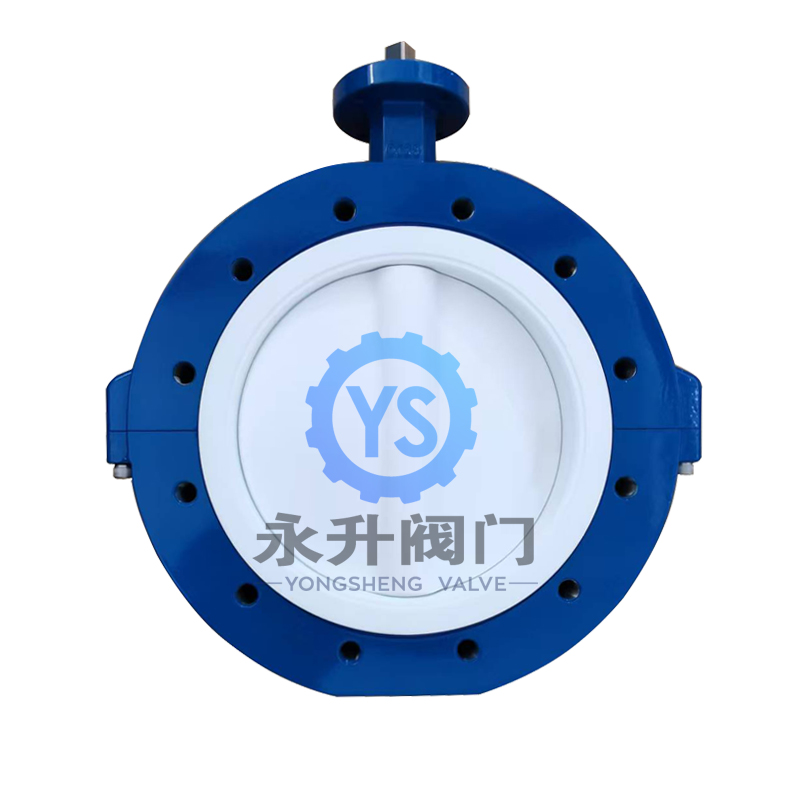
A full-lined PTFE butterfly valve is a butterfly valve whose wetted (fluid-contact) surfaces (body interior + disc / plate + sometimes stem bushing, etc.) are fully lined with PTFE (Polytetrafluoroethylene) or a similar chemically inert fluoropolymer. The lining protects the metal against corrosion and chemical attack. Useful for acids, alkalis, aggressive chemicals, etc.
Key features often include:
· Full PTFE lining: Body & disc (sometimes liner also for shaft sealing) so that the medium does not contact the metallic parts.
· Valve types: Wafer, Lug, Flanged, split-body, two-piece body, etc.
· Pressure ratings: Commonly PN10, PN16, ANSI 150 / Class 150, sometimes lower / higher depending on size & design.
· Size range: From small (DN50 / 2") up to large (DN600, DN1200 etc) depending on manufacturer.
· Temperature range: Depends on PTFE and other materials. Usually −20°C up to about +150°C (sometimes more, sometimes less).
· Body and disc materials: Stainless steel, cast iron, ductile iron, carbon steel, etc, but protected by the PTFE lining.
Pros & Cons
|
Pros |
Cons / Limitations |
|
Excellent chemical resistance (acids, alkalis, corrosives) |
PTFE lining adds cost; thick lining can reduce opening torque / increase weight in large sizes. |
|
Non-stick, easy cleaning, long life in aggressive media |
Limited temperature range (PTFE softens above certain temps / creep can be issue at high temp and load). |
|
Good sealing (if well designed) |
Mechanical strength of valve body still matters; PTFE can deform under high pressure differential if design not proper. |
|
Can prevent metal contamination for purity/clean fluid applications |
Repair/lining replacements can be more complex than unlined types. |
What to Check / Ask For When Buying
If you are selecting a supplier or model, consider:
1. Lining quality & method
How is the PTFE liner attached (bonded, mechanically fixed)?
Is the disc also lined or just the body?
2. Pressure & temperature ratings
At your operating temperature & pressure, is the PTFE specification valid? (PTFE has limits).
Overpressure, vacuum capability.
3. Standards & test certificates
Compliance: API609, EN593, EN12266, ISO5752, ANSI, etc.
Leakage class, tightness tests.
4. Connection type
Wafer, lug, flange types. Which suits your piping system.
5. Actuation
Manual lever, gear, pneumatic, electric. Torque required (PTFE adds friction sometimes).
6. Maintenance
Can the liner/disc be replaced or serviced? Spare parts available.
Expected lifetime under your fluid & environment.
7. Chemical compatibility
The specific chemicals, concentration, temperature, etc. Make sure PTFE is compatible.
Post time: Oct-20-2025
